
Fuse Architects + Builders

Each year, wildfires pose a greater threat to homes across California. As architects, this reality is reshaping how we design for clients living in fire-prone areas. The challenge is twofold: creating structures that are fire-resilient and fireproof while also being beautiful and functional. Our approach marries technical requirements with thoughtful design, resulting in spaces that are not only enduring but also uphold our standards of design excellence.
.jpeg)
Wildfire safety can be achieved in two ways: by integrating resilience from the beginning of the design process, and by retrofitting or fire-hardening existing homes. Both approaches are valuable, but the greatest protection comes when safety is considered as early as possible.
Legislation and building codes provide an important framework, yet the true test of architecture is translating those requirements into homes that feel welcoming.
In California, two key measures guide this work. AB-38 requires home sellers in wildfire zones to disclose risk and, in some cases, demonstrate defensible space compliance. By designing buffer zones and thoughtful landscaping from the outset, homes meet these requirements naturally while blending into the site. WUI Standards (Wildland-Urban Interface) outline construction practices and materials that reduce vulnerability to fire. Rather than limiting creativity, these standards allow us to explore innovative materials and methods that safeguard homes while still honoring aesthetics, function, and place.
At Fuse, this exploration often begins with the material palette — selecting elements that provide strength and safety while enhancing the beauty and character of the home.
The strength of fire-resilient, fireproof home design lies in its material choices. Every element is selected with intention, balancing durability, maintenance, and design character.
When combined with careful siting, ember-resistant detailing, and defensible landscaping, these materials create homes that not only resist fire but also recover quickly.
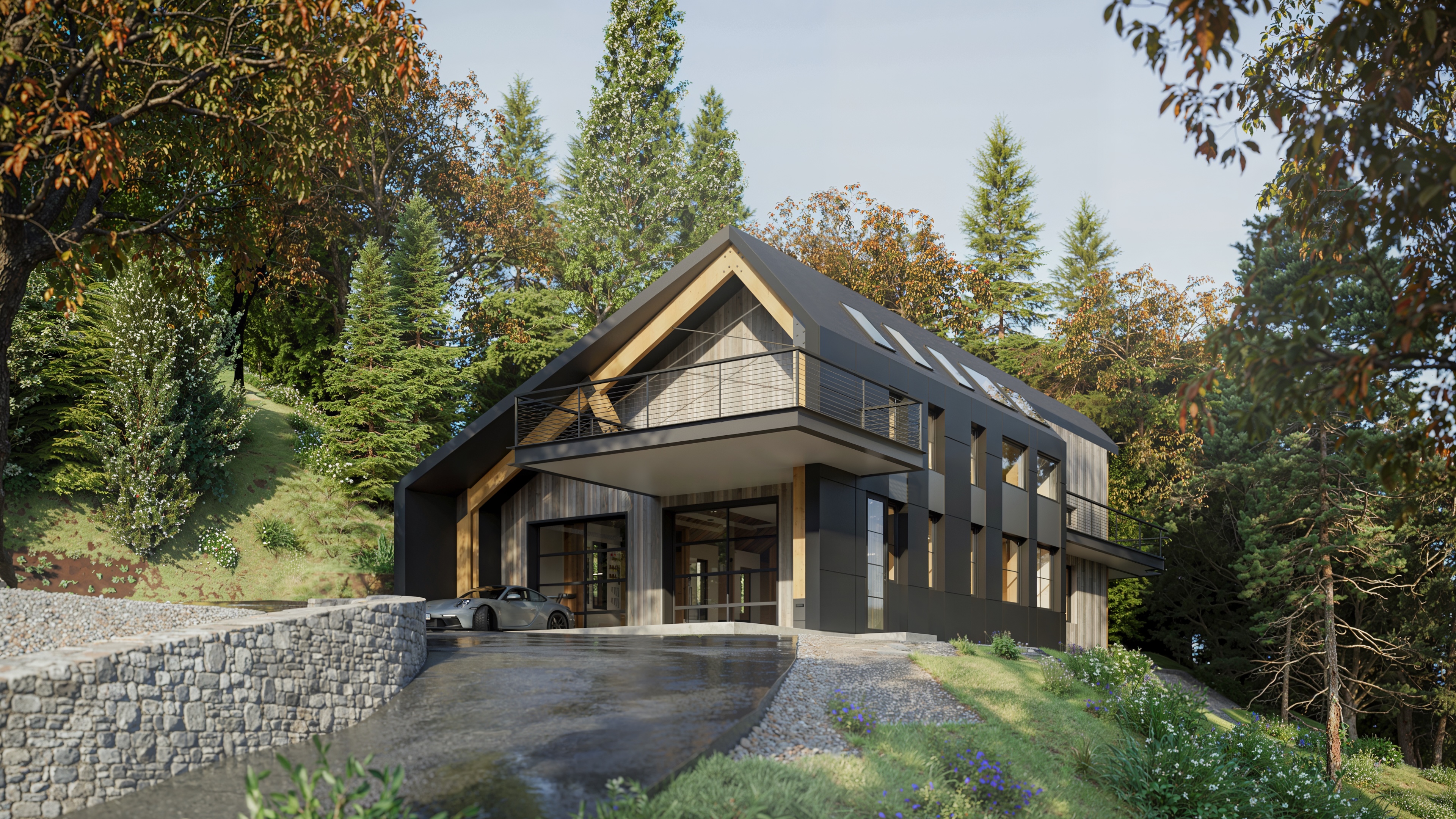
Across the Central Coast, Fuse has applied these principles in diverse settings, proving that resilience can be both functional and beautiful:
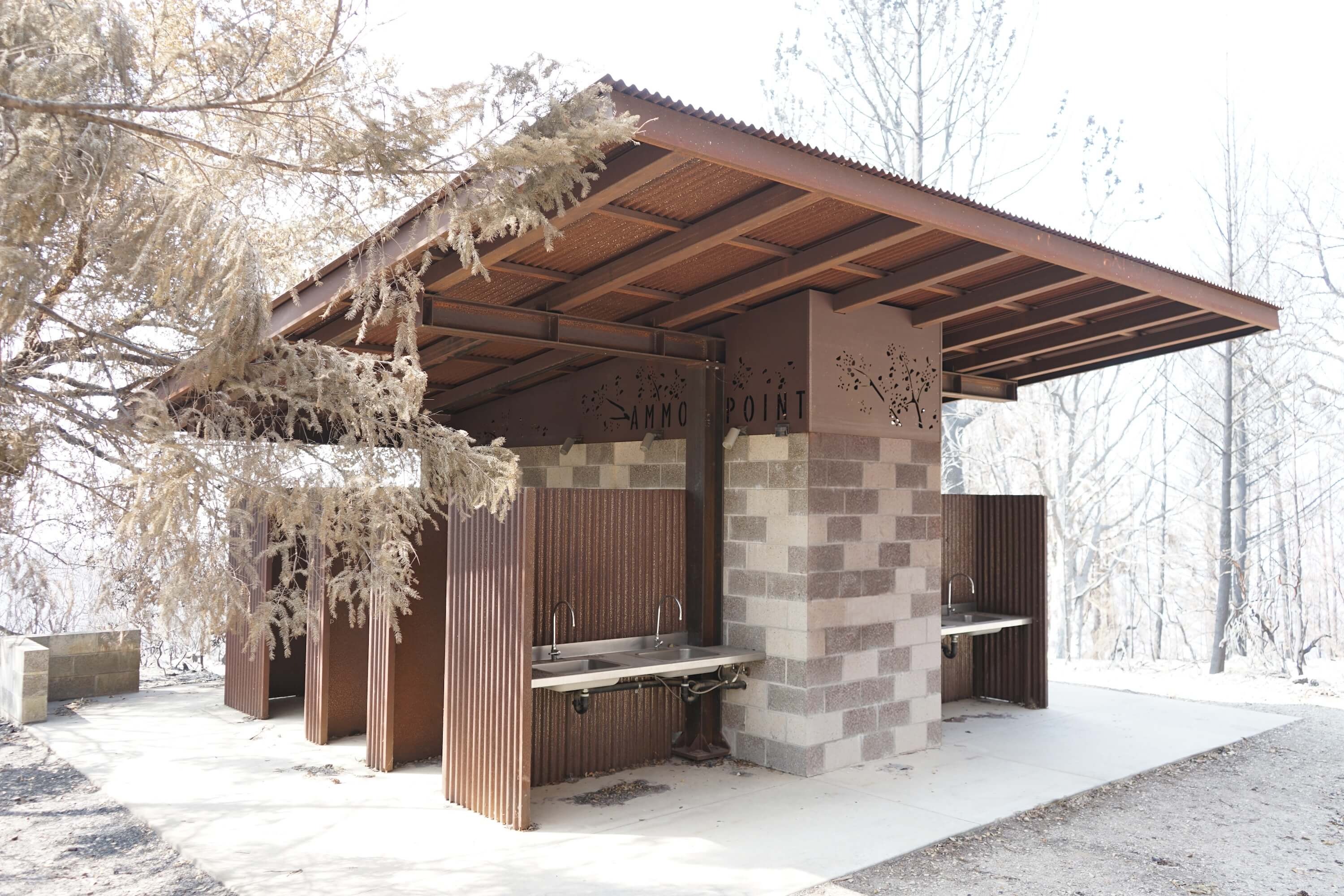
One of our fire-resilient and fire-hardened designs was tested in the 2020 CZU Lightning Complex Fire, which swept through the Santa Cruz Mountains and over the structures. Our designed bathrooms were the only structures that remained at this camp—they were unharmed, with even the toilet paper intact.
Read more in our Lehi project feature.
Building in California's wildfire-prone regions requires a different approach to material, siting, and detailing. These are the questions clients ask most often.
Fire-resilient design combines non-combustible exterior materials, ember-resistant venting, defensible-space landscaping, and careful site planning. On the Central Coast, this typically means CMU or concrete walls, metal or tile roofing, enclosed eaves, and ignition-resistant decking. The goal is to reduce the surfaces and gaps where embers can ignite a structure.
CMU and concrete construction perform significantly better than wood framing in wildfire conditions because they do not combust. For homes in Cal Fire's highest hazard zones, non-combustible structural systems are increasingly recommended and, in some jurisdictions, required. The tradeoffs are cost, design flexibility, and construction timeline.
Insurance carriers in California are increasingly factoring construction materials and defensible space into coverage decisions. Homes built with non-combustible exteriors, Class A roofs, and proper defensible space often qualify for coverage that would otherwise be unavailable or significantly more expensive. Documentation of these features at the design stage helps streamline underwriting.
Yes. Modern fire-resilient design integrates large openings, decks, and view orientation through detailing rather than material restriction. Tempered or fire-rated glass, non-combustible deck assemblies, and protected overhangs allow for the kind of coastal living Central Coast clients expect.


